

If you’ve ever thought working from home would feel like freedom… and then two weeks in you felt flat, lonely, and weirdly stuck — hi. Same.
And I need you to hear this early: it doesn’t mean you’re lazy, ungrateful, or “not cut out for freelancing”. It usually just means you’re working in a home space without enough structure.
Home is “whenever”. Work needs “this is the time”.
How it started for me (the real version)
KunsHuis started in my mum’s dining room.
It was April 2010. I had a laptop that I bought with almost two years of savings. And my internet was pay-as-you-go. That was the vibe.
A month later — May 2010 — I got married. And KunsHuis officially started in my husband’s family home (the one we eventually owned). So when I say “working from home”, I don’t mean the dreamy version. I mean real life, in a real house, with real responsibilities, and you still need to deliver professional work.
I came from a five-year advertising job. Busy days. Strong personalities. Noise. Meetings. People around you all the time.
Then suddenly… nothing.
By week two I was depressed. Properly. Hopeless.
Same space every day. Same chair. Same walls. And the only voice I heard all day was my own.
And I didn’t have kids then, so it was quiet quiet. The kind of quiet that doesn’t calm you down — it makes you overthink.
The TV thing (I know you’ll get this)
I started watching TV during the day.
Not because I was relaxing. Because it felt like people.
But it wasn’t connection. It was distraction. And then I felt guilty because now I’m behind, and I still feel flat.
So it became this cycle: work a bit, feel low, distract myself, feel worse, try again.
By month three, clients started growing. And that’s when it hit me:
No one is coming to help me out of this.
If my days were going to change, I had to change something.
Because the work-eat-sleep-repeat thing — in the same space — doesn’t just magically get better.
What actually helped (not fancy, just real)
I’m going to give you the exact things that helped me. Not the perfect version — the version that worked.
1) I moved my workspace
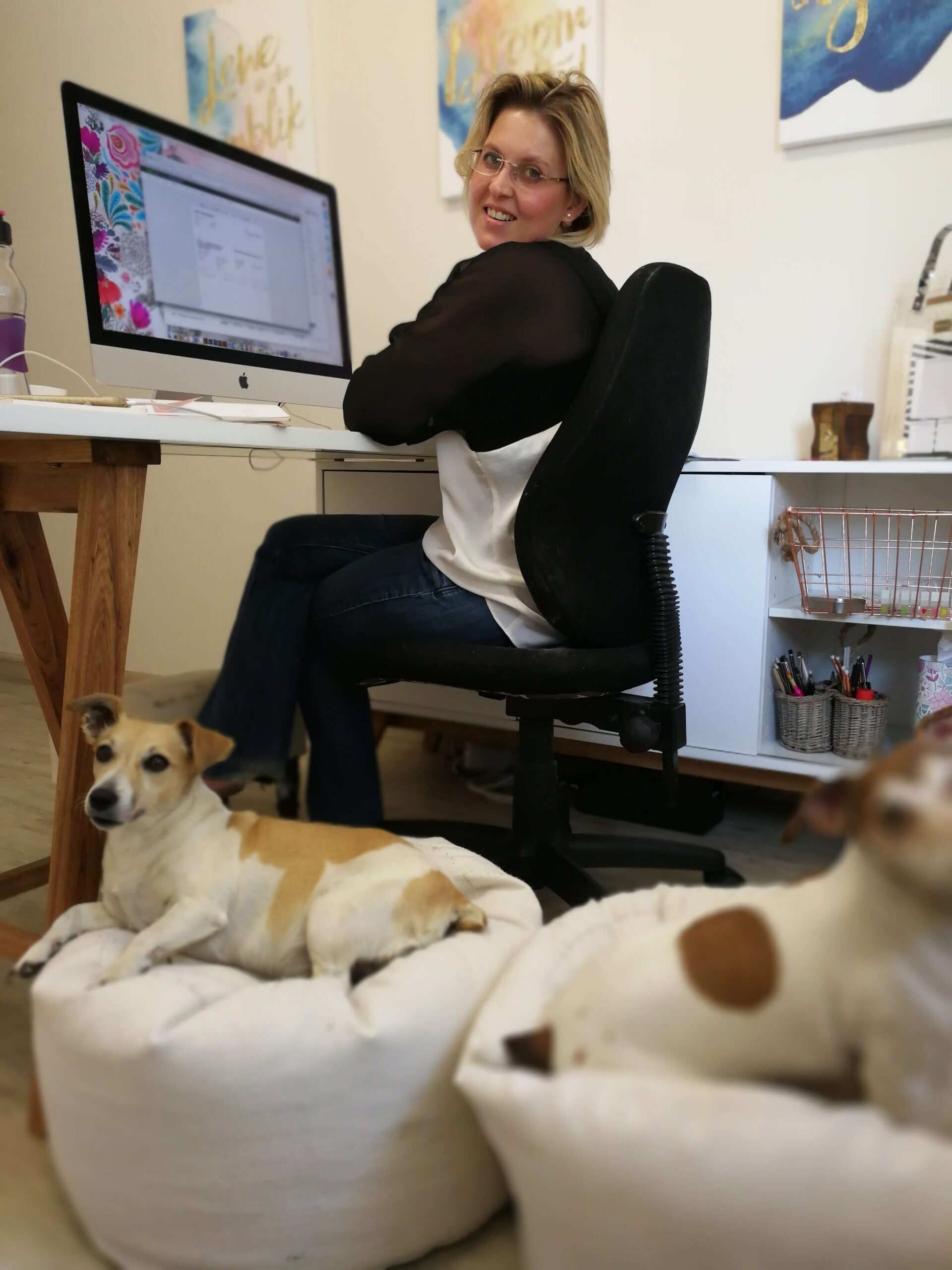
For the first three years, I worked between the living room and the spare bedroom.
Then I moved my desk out of the lounge and into the guest bedroom properly, because I needed a door.
That door mattered more than any “productivity hack”.
When I was in the lounge, my brain still felt like it was at home. So I couldn’t switch on properly. In the spare room, it felt like work.
When I closed the door at the end of the day, my brain got the message: we’re done.
Home is home. Work is work.
If you don’t have a spare room, do the closest thing you can:
- a desk in a corner,
- facing a wall,
- a small divider,
- even packing your laptop away at 4pm like you’re “leaving the office”.
You need something that creates a line.
2) I got dressed like a normal working human
Not fancy. Just dressed.
Because if I stayed in home clothes, my brain stayed in home mode.
And then I’d sit at the desk wondering why I can’t focus.
My simple routine became:
- get up
- coffee
- get dressed (jeans and mascara is my go-to)
- start at a set time
That routine didn’t make life perfect. It just made me more stable.
3) The schedule saved me
This is the one I wish I understood sooner.
Working for yourself is not “less responsibility”. It’s more. Because now you’re the boss and the employee and the admin department and the person who has to motivate you when you’re flat.
So I started giving my day edges:
- start time
- break
- movement
- finish time
And I started planning properly. Not in my head. On paper.
A planner helps because it stops the chaos from living inside you.
Also — ticking things off does something good to your brain. It’s small, but it works.
4) Boundaries (because people will treat your workday like free time)
People think home means available.
They’ll drop in. They’ll call. They’ll chat. They’ll distract you without meaning to.
So you have to set working hours and communicate them.
No open-door policy during work hours.
And I’m going to say this with love: be the example.
Because if you’re watching Netflix at 11am and feeling guilty, it doesn’t help your confidence. And confidence is part of your work.
You don’t need to be perfect. But you do need to honour what you’re building.
5) Stay connected (this is your lifeline)
Working alone can make you feel like you’re not part of the world anymore.
So I started reaching out to other creatives. Coffee dates. Catch-ups. Even quick check-ins.
And I also stayed connected to the industry by reading, following people, joining email lists, looking for workshops, learning opportunities, and showing up when I could.
Remember, in 2010 the internet wasn’t like today. So it took effort. But it mattered.
Even if you’re introverted, you still need some connection. Just in smaller doses.
6) Stay inspired on purpose
This one is simple:
It’s your responsibility to stay up to date.
Design changes. Tech changes. Trends change. The industry moves.
So I budget for learning. Always have.
Courses. Podcasts. Books. Magazines. Anything that keeps your brain curious again.
Because when you work from home, your world can get small if you don’t feed it.
7) Tools that genuinely help
A few basics that make home-working smoother:
- WhatsApp Desktop (fast client comms)
- Adobe (obviously)
- Notion (to keep projects, processes, and client stuff organised)
- Dropbox / Google Drive (storage + sharing)
- Clockify free time tracker
- WeTransfer (big files)
- an invoicing/accounting tool (like Sage, Xero, QuickBooks — whatever works for you)
Not a million apps. Just the few that remove friction.
The part that matters most: make it your own
You started working from home for personal reasons.
So build it in a way that supports your life.
Try tips. Learn from others. But don’t force a routine that doesn’t fit you.
Your goal isn’t to become someone else’s version of productive.
Your goal is to design a working life that you can actually live inside.
That’s Design Your Life in real terms.
Body, mind, spirit (because you are the business)
The most crucial ritual I’ve ever had — especially working alone — is daily care for:
- body
- mind
- spirit
Because that combination keeps you steady when work gets stormy.
Some days it’s gym. Some days it’s a walk. Some days it’s quiet time and a podcast while you clean your desk. But do something.
You’re not a machine. And if you’re the whole business, you have to look after the whole person.
If you’re struggling right now, do this today
Just one thing:
- Move your workspace (even slightly)
or - Choose a start time for tomorrow and stick to it
or - Book one movement session
or - Send one message to someone and set a coffee date
Small things. Done consistently.
That’s how it shifts.
Working from home can be beautiful.
But it needs structure.
Not to box you in — to keep you okay.